Diario del direttore
Conductor’s Journal No.10 – One Rehearsal at a Time
Two concerts, one shared preparation, and an orchestra that changed from rehearsal to rehearsal. A behind-the-scenes account of Mozart’s Linz Symphony K425 and Coronation Mass K317, from the first rehearsal to the final performance.
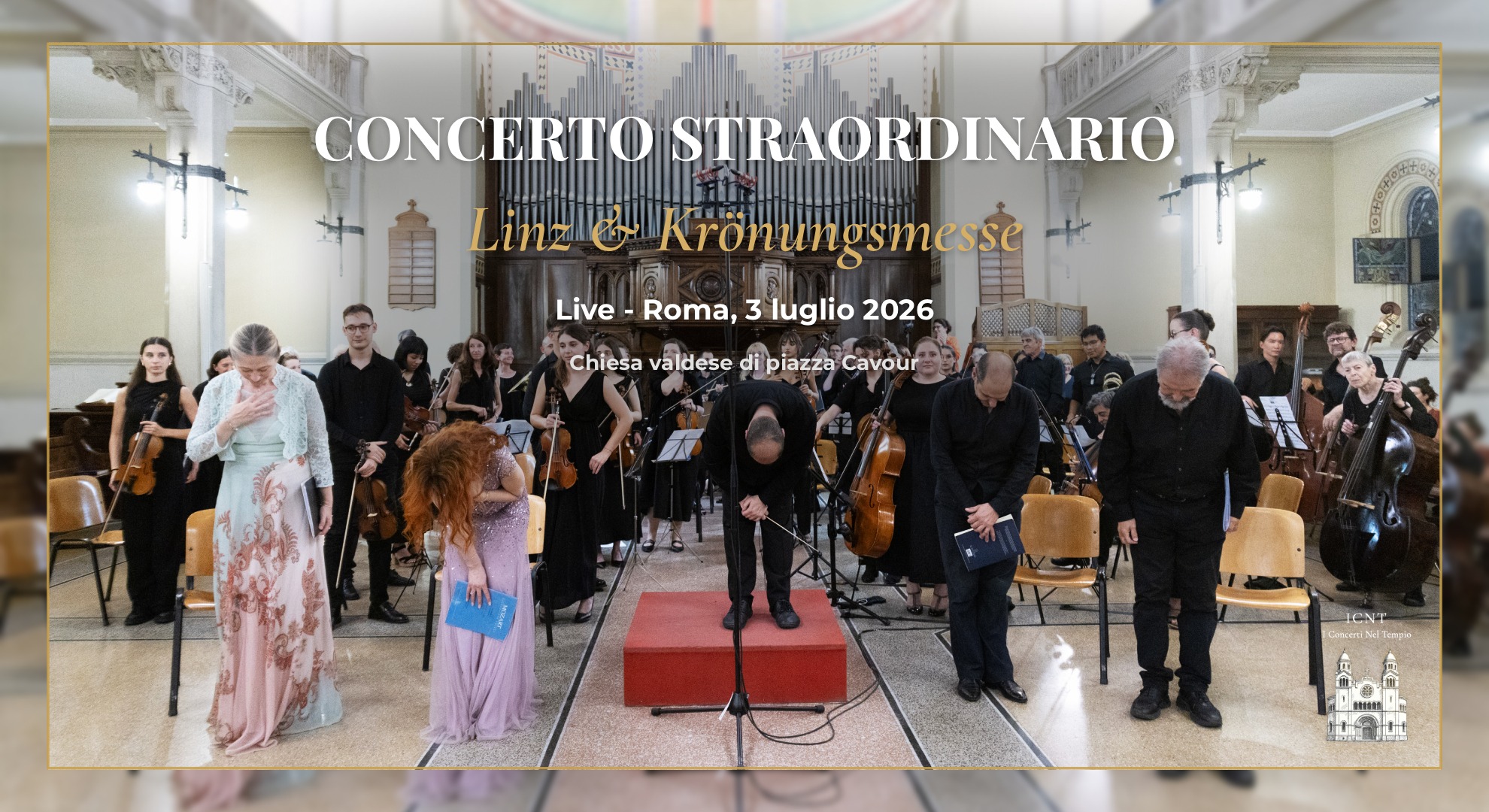
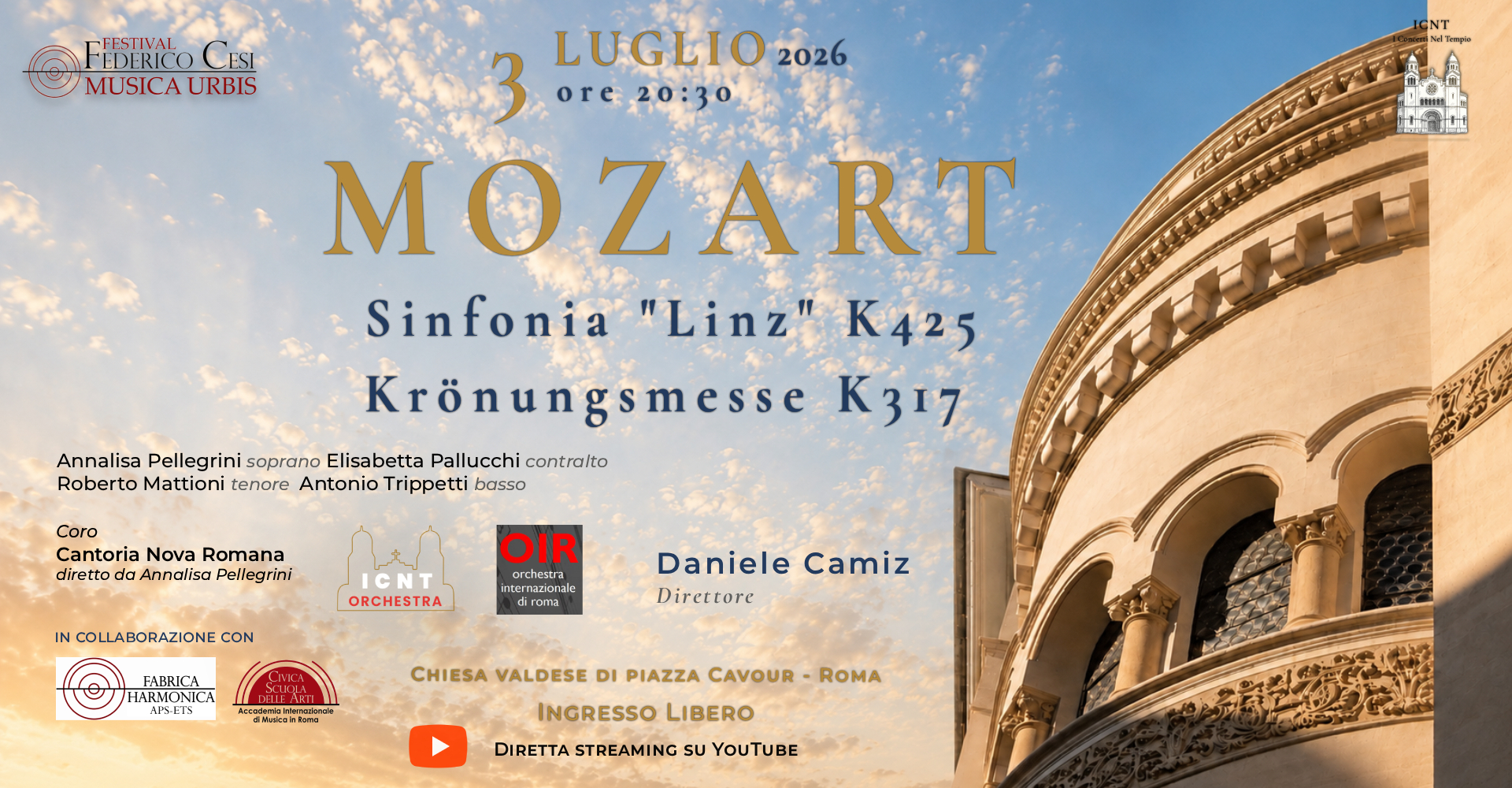
This concert did not begin as an internal ICNT Orchestra project.
It started with an invitation to collaborate: bringing together orchestra, choir, soloists and different musical institutions to perform Mozart’s Coronation Mass K317. Then we realised that the Mass alone would make for a rather short programme, so we added the Symphony No. 36 “Linz” K425, which the ICNT Orchestra had already performed in February as part of the Mozart Symphonies Challenge.
From a practical point of view, it made perfect sense. The instrumentation is almost the same, both works are in C major, and many of the musicians already knew the symphony.
As rehearsals went on, however, we realised that the two works belonged together for musical reasons as well.
The rehearsal process was anything but straightforward.
The first orchestral rehearsal was almost a reading session with a reduced ensemble: a few strings, some winds, no violas at all. The Mass could still be read through reasonably well; the Symphony, without violas, much less so. The second rehearsal was better, but the orchestra was still incomplete.
In practice, I never had the full orchestra in front of me until the dress rehearsal.
Meanwhile I also rehearsed separately with the choir, accompanied only by piano. That is useful for learning notes, entries and text, but it does not solve the real issue. Everything changes once the orchestra is there: breathing, balance, tempi and the way the choir perceives its cues.
The dress rehearsal on 1 July was therefore the first time orchestra, choir and soloists were almost all together.
That was the moment when the concert finally started to take shape.
There were still things to fix, of course. The oboes remained the weakest section: unstable intonation and a few uncertain moments. The choir, which had sounded rather light in the piano rehearsal, found much more presence with the orchestra. The soloists sang beautifully, although they occasionally tended to broaden the tempo and needed to be kept together.
The Symphony, on the other hand, already felt solid. We had performed it before, and it showed. At that point the work was mainly about refining details, balance and sound.
On 3 July, as I entered the Waldensian Church in Piazza Cavour, I found it completely full.
The heat was almost unbearable, yet the audience remained attentive and involved throughout the evening. From the podium, you can feel these things.
The Symphony went very well. The orchestra was focused, compact and full of energy. The oboes still had some difficulties, but the rest of the orchestra held together well and the overall result was convincing.
The audience applauded after every movement.
That does not always happen, nor is it always desirable, but that evening I took it as a sign that the audience was truly engaged.
Then came the Mass.
We had planned to include four short reflections by Pastor Eleonora Natoli before some of its sections. They were not musicological introductions, but brief meditations intended to create a human and spiritual space around the music.
Naturally…
…I forgot to look at her before the first one.
I simply gave the upbeat for the Kyrie.
A couple of seconds later I saw her already standing at the pulpit and realised my mistake. Stopping the music would have been worse, so we carried on and recovered immediately afterwards, before the Gloria. In the end, the overall journey still worked exactly as we had imagined.
That, too, is part of live performance.
The Mass itself went well. It had energy. The choir sounded stronger than I had expected, the soloists made an important contribution and the orchestra supported everything with confidence.
There was one delicate moment at the beginning of the Hosanna after the Benedictus. The oboes were not perfectly together, the entry became slightly confused and, perhaps unconsciously wanting to get past that moment, I gave the upbeat a fraction too early. Fortunately, much of the orchestra came in with me and everything immediately fell back into place.
From there to the end, everything flowed naturally.
At the end I played my usual little game with the audience to make them ask for an encore.
It worked.
We performed the Dona nobis pacem once again.
It was a lovely way to end the evening.
It was not a perfect concert. It could hardly have been, given the preparation and all the real conditions behind it.
But it was a genuine one.
The Symphony worked very well. The Mass had energy. Eleonora Natoli’s reflections added a human and spiritual dimension to the evening without ever overshadowing the music.
Two days later, the same programme was performed in Acquasparta for the opening concert of the Federico Cesi – Musica Urbis Festival, this time under the baton of Angelo Bruzzese.
As for me, I was no longer on the podium.
I was singing with the basses.
A rather unusual point of view.
But perhaps that is another story.